How to Protect Furniture and Floors When Moving Heavy Furniture Yourself
Lorem ipsum dolor sit amet, consectetur adipiscing elit. Suspendisse varius enim in eros elementum tristique. Duis cursus, mi quis viverra ornare, eros dolor interdum nulla, ut commodo diam libero vitae erat. Aenean faucibus nibh et justo cursus id rutrum lorem imperdiet. Nunc ut sem vitae risus tristique posuere.


How to Protect Furniture When Moving Heavy Items
A step-by-step guide to protecting furniture, floors, walls and doorframes when moving heavy items yourself, including the supplies to gather first and the order that prevents most moving-day damage.
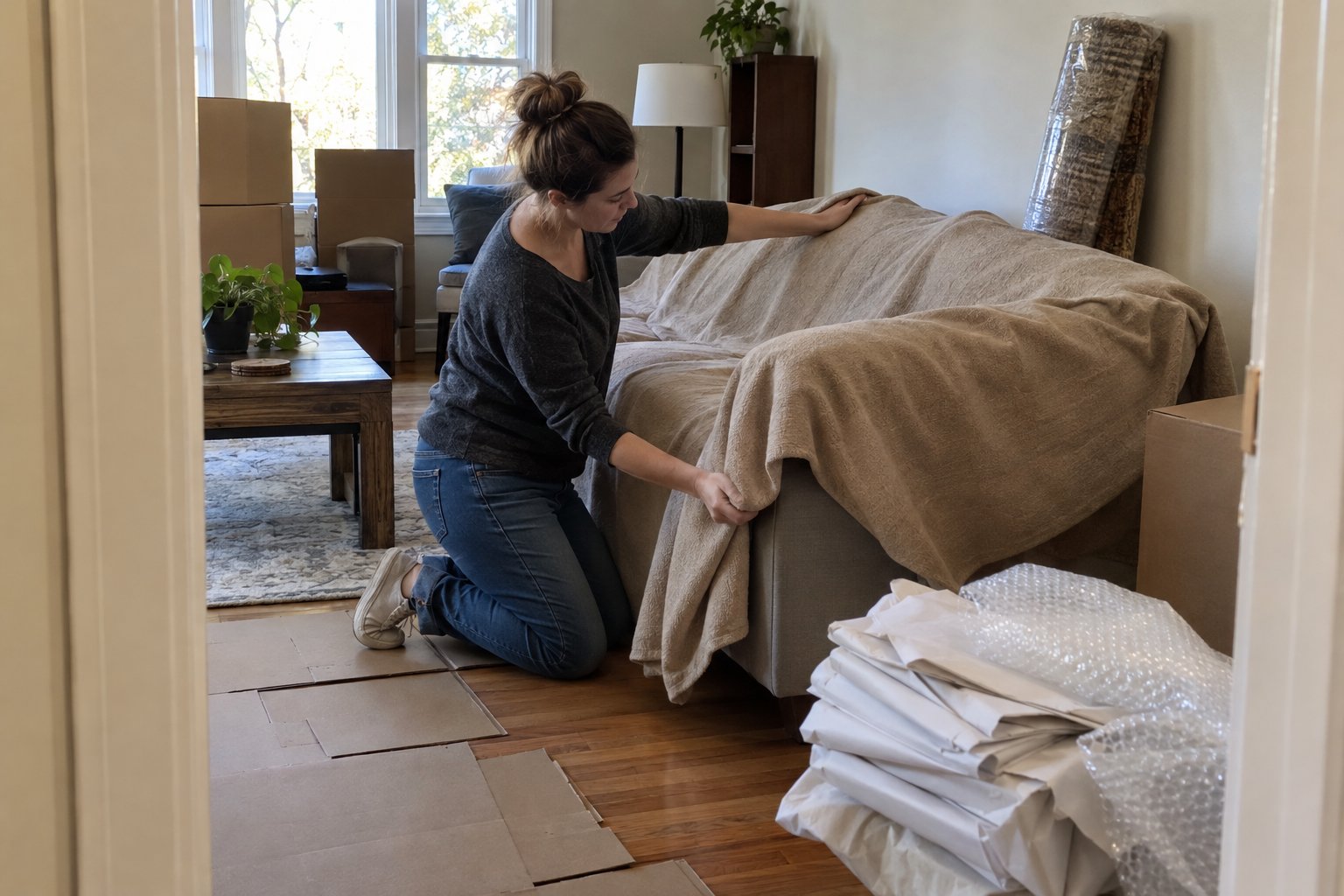
Protecting furniture and floors when moving heavy items comes down to covering the piece itself, covering the surfaces it will cross, and moving it in a planned order instead of improvising room by room. Scratches, gouged walls and scuffed floors almost always happen at a doorway, a stair turn or a tight corner, not in the open middle of a room. A little setup before anything gets lifted prevents most of that damage.
This guide walks through what to gather first, the order to follow, and the mistakes that cause the most damage when moving heavy furniture without professional help.
What Do You Need Before You Start Moving Heavy Furniture?
Before anything gets lifted, gather moving blankets or furniture pads, stretch wrap, cardboard sheets or old flooring runners, painter's tape, furniture sliders, and a dolly rated for the heaviest piece you own. Having these on hand before you start means you are not stopping mid-lift to find something to protect a wall you are about to hit.
Furniture pads wrap around dressers, couches and tabletops to absorb bumps against doorframes and each other. Stretch wrap holds pads in place and keeps drawers or doors from swinging open in transit. Cardboard or old rugs laid down over hardwood or tile protect floors from dolly wheels and dragged table legs. Furniture sliders go under the legs of anything too heavy to lift safely, letting you slide it across a protected floor instead of carrying it. If you do not have a dolly, renting one for the day is worth it: dragging a dresser across any floor, protected or not, puts stress on joints and legs that a pad alone will not stop.
Ask a second person to help before you start, even for pieces that look manageable alone. A dresser or sofa that shifts weight unexpectedly is how most furniture and most walls get damaged.
What Is the Right Order to Move and Protect Heavy Furniture?
Work through these steps in order so protection is in place before the heavy lifting starts, not after something already got scratched.
- Clear and measure the path first. Walk the route from each piece of furniture to the truck and measure doorways, stair turns and hallway width against the furniture's dimensions. This tells you where a piece needs to be tilted, rotated or disassembled before it gets stuck.
- Lay down floor protection along the entire route. Cardboard sheets or old runners taped down at the edges stop dolly wheels and dragged legs from scuffing hardwood, vinyl or carpet. Cover the whole path, not just the spots that look risky.
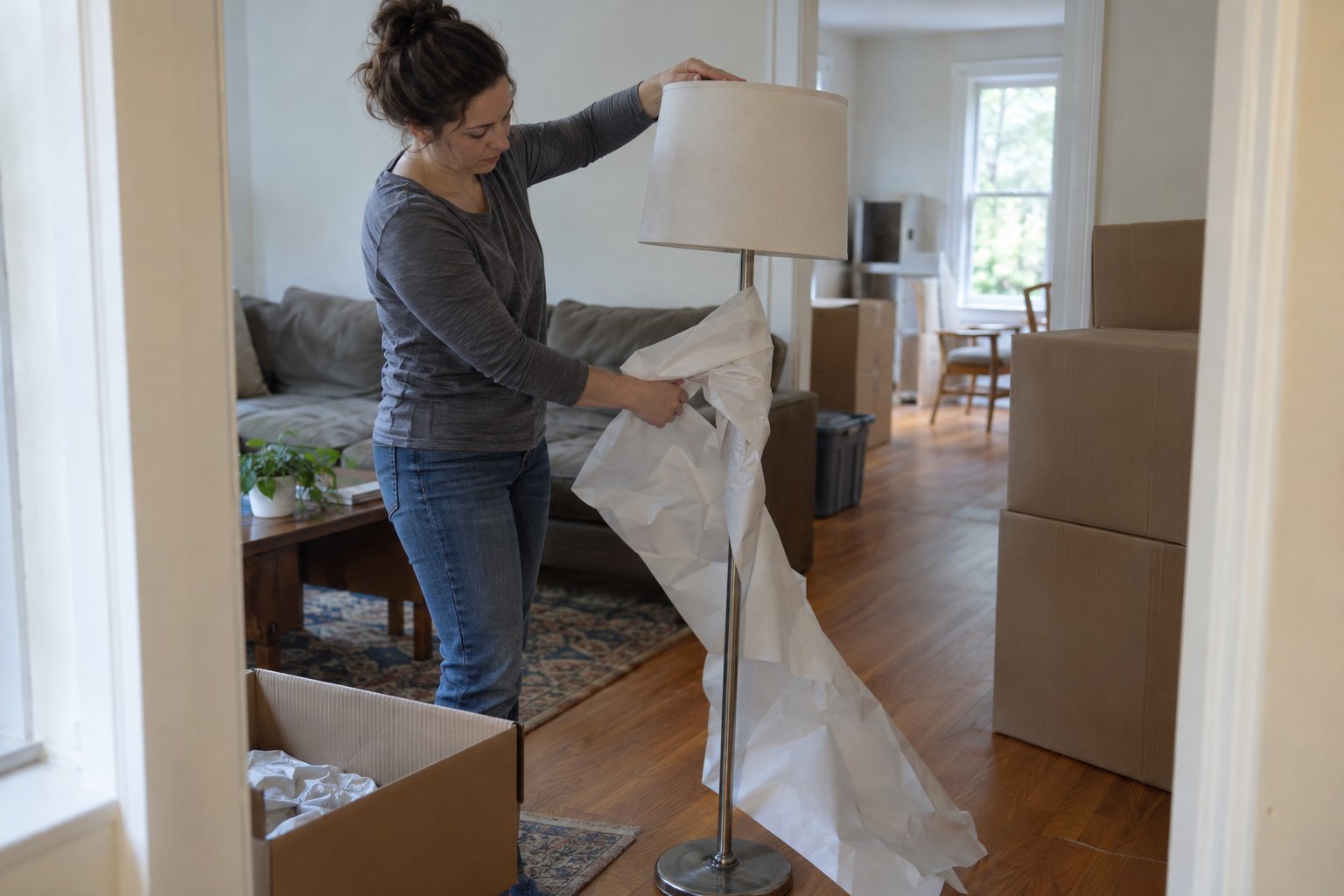
- Remove and protect hardware and glass separately. Take off drawer pulls, glass shelves and removable legs and wrap each one on its own so it cannot scratch the main piece or go missing.
- Disassemble what you reasonably can. Beds, large tables and anything with legs that unscrew move through doorways far more easily in pieces than whole, and disassembly removes the awkward weight shifts that cause drops.
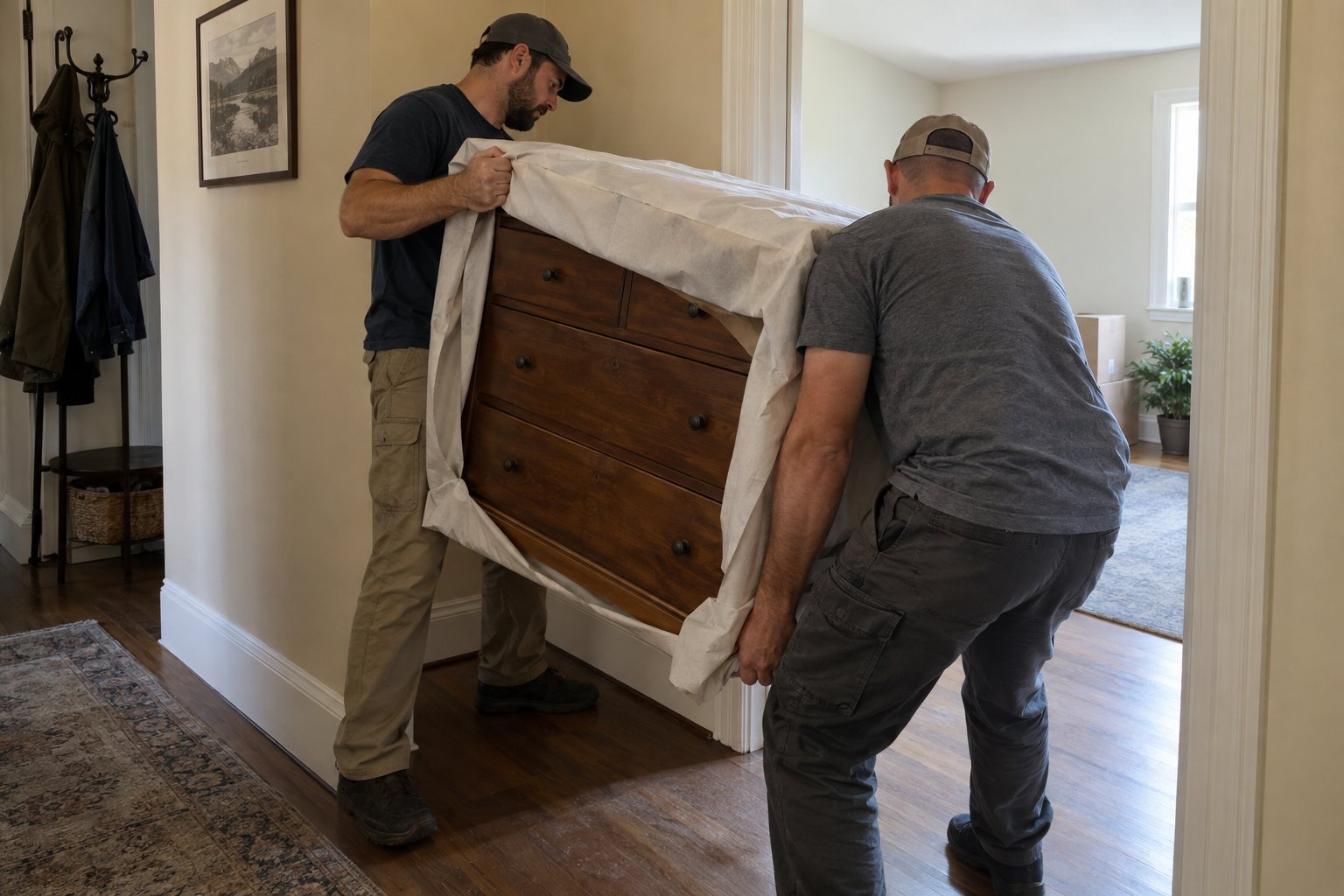
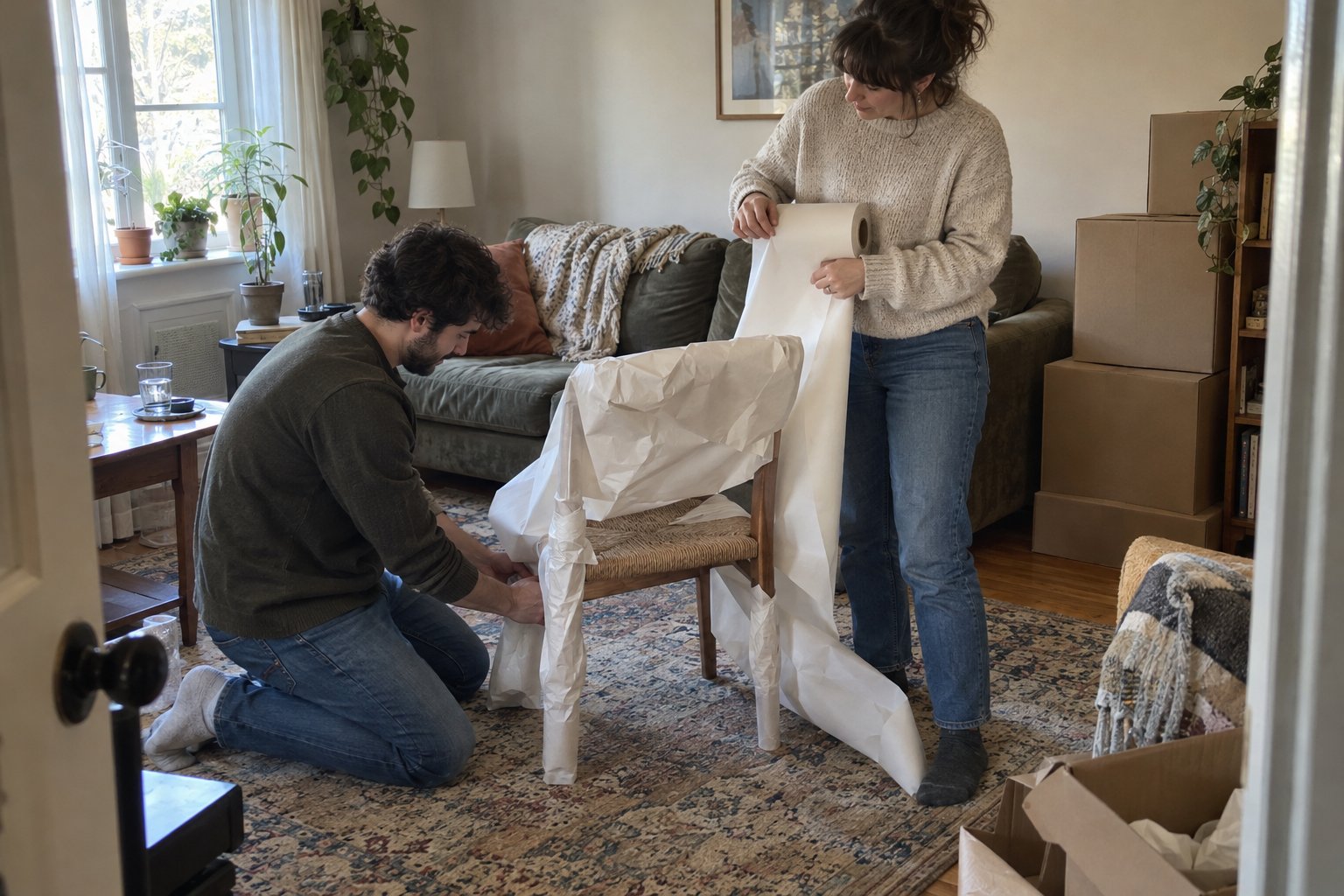
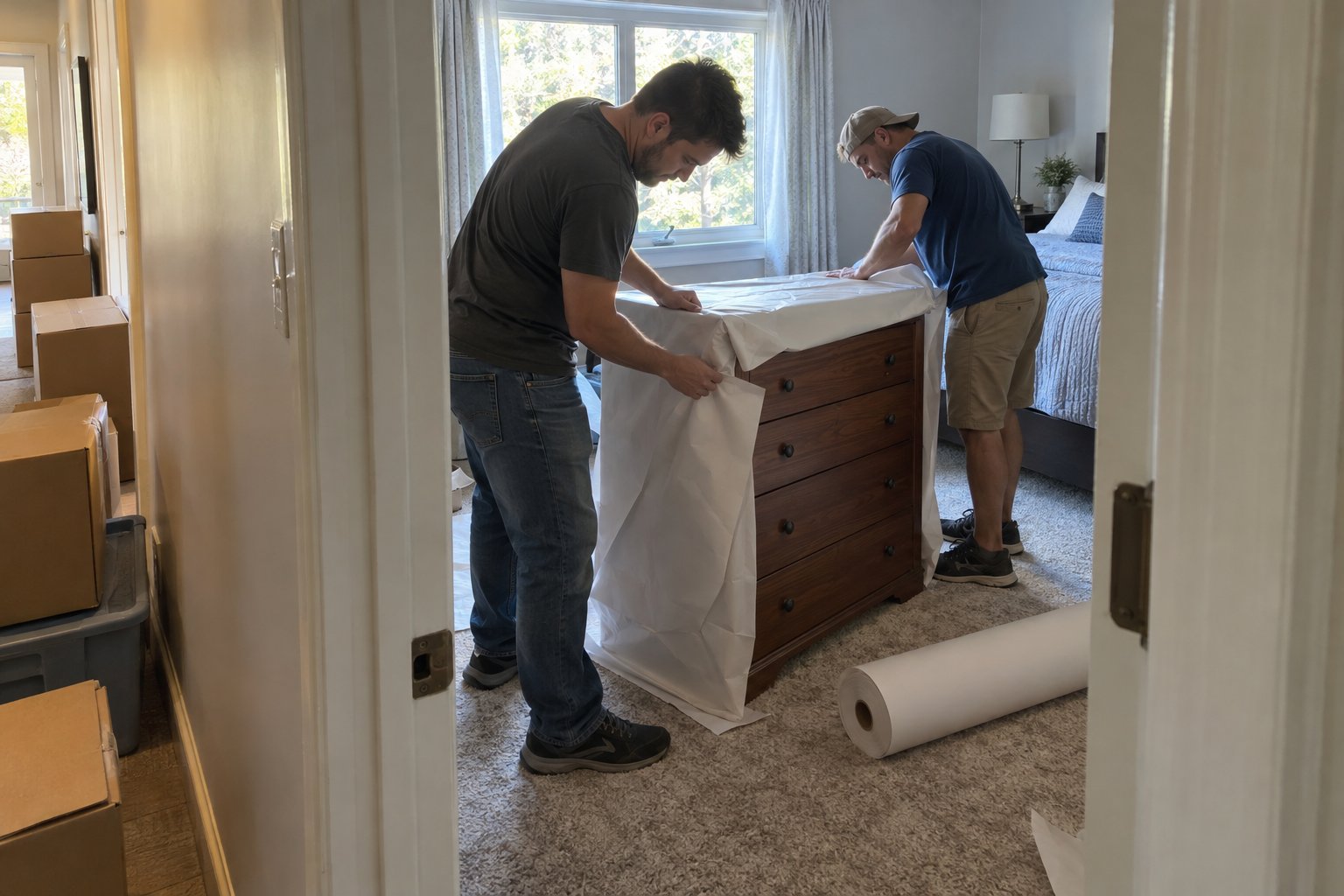
- Wrap the piece fully in furniture pads. Cover corners, edges and any exposed wood or upholstery, then secure the pads with stretch wrap so they cannot slip during the carry.
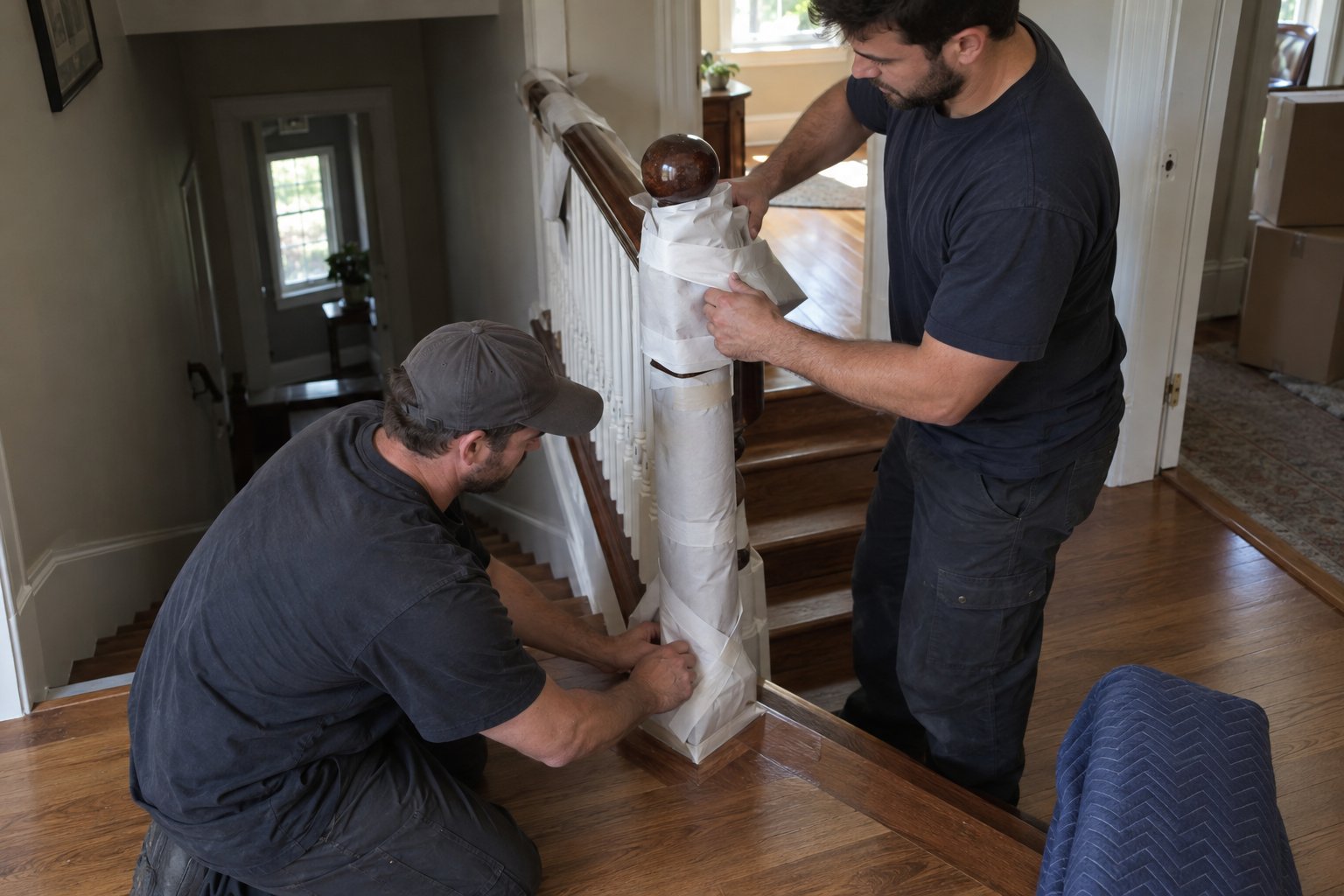
- Protect doorframes and corners before the carry begins. Tape a folded moving blanket or cardboard corner guard to tight doorframes and stair newels the furniture will pass.
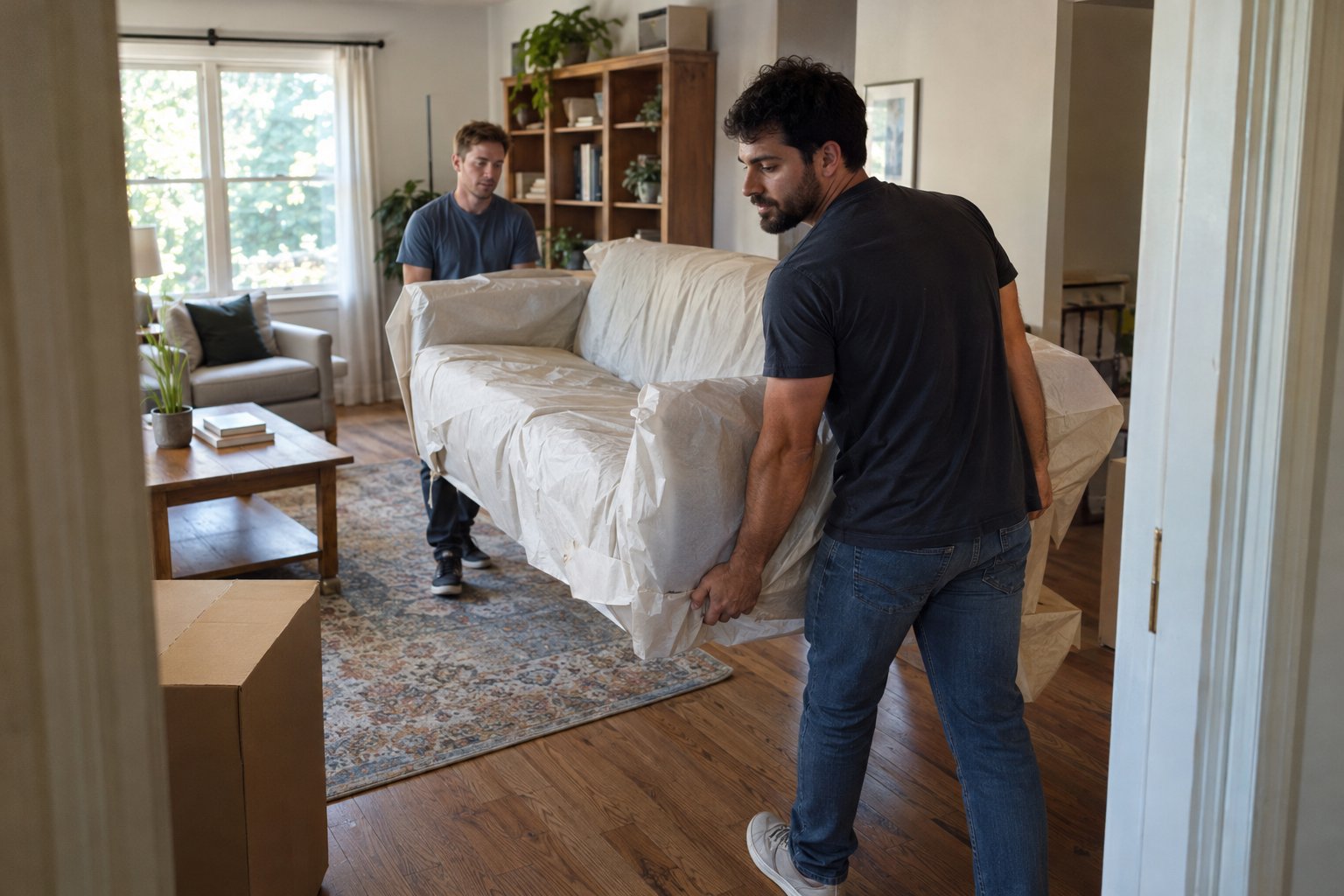
- Lift and carry with a planned path, not a guess. Decide who goes first, which end tilts, and where you are setting it down before you pick it up. Communicate out loud at every turn.
- Slide instead of carry when the floor allows it. Furniture sliders under the legs let two people guide a heavy piece across a protected floor with far less risk of dropping it.
- Reassemble and reattach hardware last. Once the piece is in its final spot, remove the wrap, reattach legs, shelves and pulls, and check for any pad marks or scuffs you can still address.
How Do You Protect Floors Specifically During a Move?
Floors take the most abuse during a move because every trip across them carries weight, whether it's a dolly, a dragged chair leg or a dropped box corner. Protecting them means covering the full travel path, not just the room where furniture sits.
Tape down cardboard, rosin paper or old moving blankets along hallways, through doorways and down any stairs furniture will cross. Check the tape every hour or so on moving day, since foot traffic loosens it and a curled edge becomes a trip hazard as well as a gap in protection. On stairs, protection needs to be secured tightly at each step edge, since a loose sheet on a stair is more dangerous than no protection at all. If your home has finished hardwood or tile in high-traffic zones, add a second layer there, since that is where wheels and furniture legs make repeated contact over the course of a full day.
What's the Most Common Mistake People Make Protecting Furniture?
The most common mistake is wrapping furniture but skipping the floors and walls, then being surprised when the damage shows up somewhere else entirely. A padded dresser can still gouge a baseboard, and a wrapped table can still scuff a floor if nothing is laid down underneath it.
The fix is to treat protection as covering three things every time: the item being moved, the surfaces it crosses, and the corners and frames it passes through. Skipping any one of the three means the other two did not fully do their job. A rule of thumb that holds for most homes: budget about an hour to fully protect and stage a single large room, including laying floor protection and wrapping furniture, before any lifting starts.
Should You Move Heavy Furniture Yourself or Get Help?
Whether to move heavy furniture yourself depends on the weight of the pieces, the number of stairs or tight turns involved, and whether you have a second set of hands you trust to communicate clearly during a lift. A single heavy dresser through a straight hallway is a reasonable DIY job with the right supplies. A sectional sofa down a stairwell with a tight turn is a different kind of risk, both to the furniture and to whoever is carrying it.
If your home has narrow doorways, a lot of stairs, or furniture you are not confident two people can control safely, professional loading and unloading help removes the guesswork around technique and timing. For pieces that need to come apart first, furniture disassembly and reassembly service handles the step most DIY moves get wrong: putting a bed frame or table back together correctly on the other end.
If you are moving within a smaller space like an apartment or condo, the margin for error around tight hallways and shared stairwells is even smaller, and apartment and condo moving support is built around exactly those layouts.
What Supplies Make the Biggest Difference for a DIY Move?
Furniture sliders and a properly sized dolly make the biggest difference, because they remove the two moments where most injuries and most damage happen: the initial lift and the awkward mid-carry adjustment. Pads and wrap protect the furniture's surface, but sliders and a dolly change how much physical control you have over the piece while it is moving.
If you are local to the area and want a professional crew to handle the heaviest or most awkward pieces while you manage the rest yourself, movers serving Columbus, OH and movers serving Dublin, OH can take on just the loading and carrying portion of a move rather than the whole job.
For safe lifting mechanics, especially on anything over a weight you'd normally lift alone, the ergonomics and safe lifting guidance published by OSHA covers posture and technique that applies directly to moving day, not just workplace settings.
Related Reading
If you're still deciding whether to handle a move yourself or bring in help, DIY moving vs. hiring movers walks through how the two approaches compare on time, effort and risk. And if your crew size question goes beyond just protecting furniture, how many movers you actually need breaks down crew sizing by home size and layout.
Planning your move? Request a quote from Journeymen Moving.
Frequently Asked Questions
What household items should I use instead of buying moving blankets?
Thick towels, bed comforters and spare rugs can substitute for moving blankets on smaller pieces, though they slip more easily and need more tape or wrap to stay in place. For large furniture or long carries, rented furniture pads hold up better and stay secure through multiple turns.
How do I protect a hardwood floor from a heavy dolly without renting equipment?
Lay down flattened cardboard boxes or an old rug along the path the dolly will travel, taping the edges flat so they do not shift or curl underfoot. Replace or re-tape any section that gets worn through partway through the day.
Do I need to remove furniture legs before moving a couch or table?
Removable legs should come off first whenever possible, since they are the most common point of damage during a tight turn and the easiest part to protect separately once detached. Wrap each leg individually and keep the hardware in a labeled bag.
How do I protect walls and corners when carrying furniture through a hallway?
Tape a folded moving blanket or a cardboard corner guard to the doorframes and wall corners along the carry path before lifting the furniture, not after a bump happens. Measure the furniture against the doorway width first so you know where tilting or rotating will be needed.
What should I tell a helper before we start carrying something heavy together?
Agree beforehand on who leads, which direction you're tilting the piece, and where you're setting it down, so neither person is guessing mid-carry. Call out stairs, turns and door edges out loud as you approach them.
Related Blogs
What Our Customers Say
Read genuine feedback from our satisfied customers to understand why we are the trusted choice for moving services.
Moving Ohio Families and Military Members With Care
From local Ohio moves to long-distance relocations, Journeymen Moving helps families and military members move with confidence. From the first box to the final unload, our team is here to make your move easier every step of the way.