Moving Into an Older Home in Oakwood, Bexley or Upper Arlington? Protect Your Stairs, Floors and Trim
Lorem ipsum dolor sit amet, consectetur adipiscing elit. Suspendisse varius enim in eros elementum tristique. Duis cursus, mi quis viverra ornare, eros dolor interdum nulla, ut commodo diam libero vitae erat. Aenean faucibus nibh et justo cursus id rutrum lorem imperdiet. Nunc ut sem vitae risus tristique posuere.

.png)
Protecting Floors & Trim in an Older Home Move
Older homes in Oakwood, Bexley and Upper Arlington come with narrow stairs, original hardwood floors and irreplaceable trim. Here's how to protect all three during a move, from staircase wrapping to floor coverings to knowing when to call in professional help.
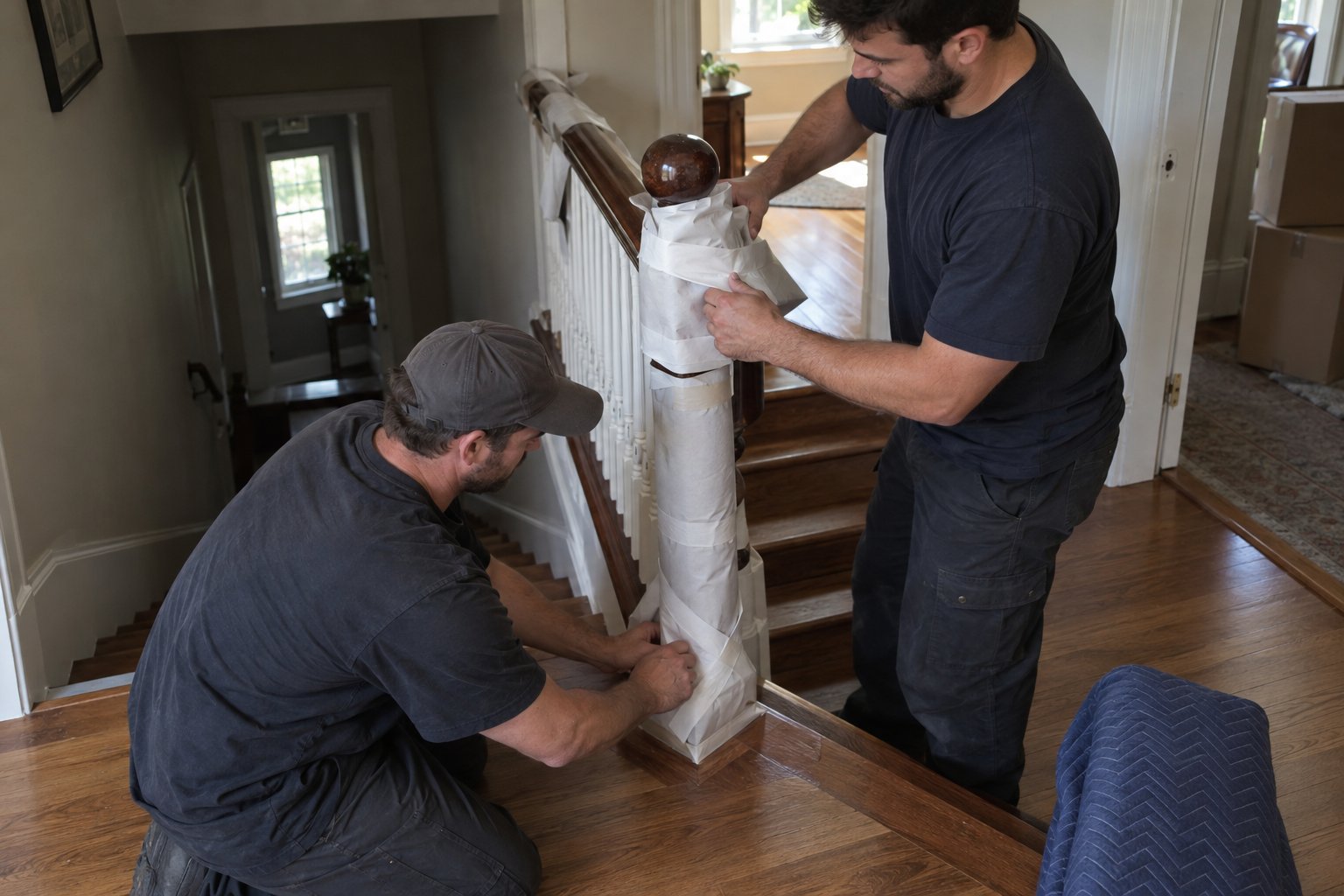
If you're moving into (or out of) one of the century-old homes in Oakwood, Bexley or Upper Arlington, your biggest risk on moving day isn't a broken lamp. It's a gouged newel post, a cracked plaster corner, or a hardwood floor scuffed by a dolly wheel. Protecting stairs, floors and trim during a move takes more planning than a typical move because these houses weren't built with modern furniture, modern movers, or modern moving equipment in mind.
Homes in these three neighborhoods tend to share the same quirks: narrow staircases with tight turns, original quarter-sawn oak or heart pine floors, plaster walls with horsehair backing, and trim and millwork that simply isn't made anymore. None of that is replaceable at a home improvement store. Here's how to get your belongings in or out without leaving a mark on the house.
Why Are Older Homes Harder to Move Furniture Through?
Older homes in this area were built before modern furniture sizing and before movers used large dollies and straps, so hallways, stairwells and doorframes are often tighter and less forgiving. A sectional sofa or king bed frame that slides through a 2015 build can jam solid in a 1925 stairwell.
Many Oakwood and Bexley homes have winding staircases with a landing turn, low ceilings in upstairs hallways, and door openings that run narrower than today's standard 32 inches. Upper Arlington's older housing stock adds plaster ceilings and original picture rail trim that chips easily if a mattress or dresser brushes against it. Walking the route from truck to final room before you move a single box, measuring the tightest turns, and deciding in advance what needs to be disassembled or carried on edge saves both the furniture and the house.
Protecting Original Hardwood and Pine Floors
The floors in these houses are almost always original, and once they're scratched, matching the stain and wear pattern is difficult even for a skilled refinisher. The fix is to cover the full path before anything gets carried across it, not just the high-traffic spots.
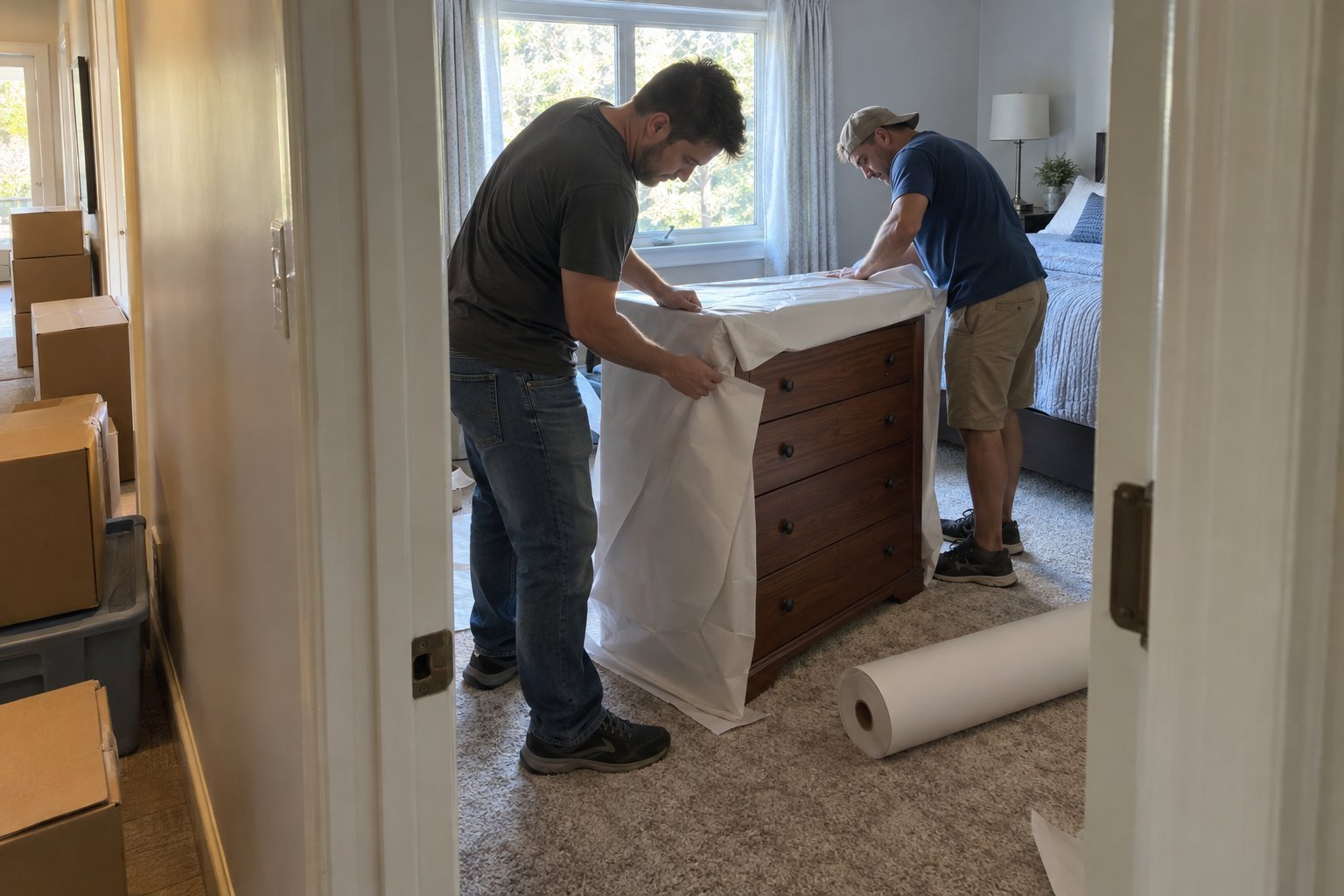
Ram board or heavy-duty floor runners taped at the seams (never taped directly to the wood) hold up far better than moving blankets alone, which can shift underfoot and bunch up. Pay particular attention to thresholds between rooms, where floor transitions are often slightly raised and catch dolly wheels. If movers are using a four-wheel dolly on original floors, confirm the wheels are rubber, not hard plastic, since plastic wheels under a loaded dolly can dent softer heart pine.
Protecting Stairs, Banisters and Newel Posts
Staircases take the most abuse in an older-home move because every piece of furniture has to pass through the narrowest, most awkward point in the house. Wrapping the banister and newel post in moving blankets secured with painter's tape, not duct tape, prevents the finish from lifting when the wrap comes off.
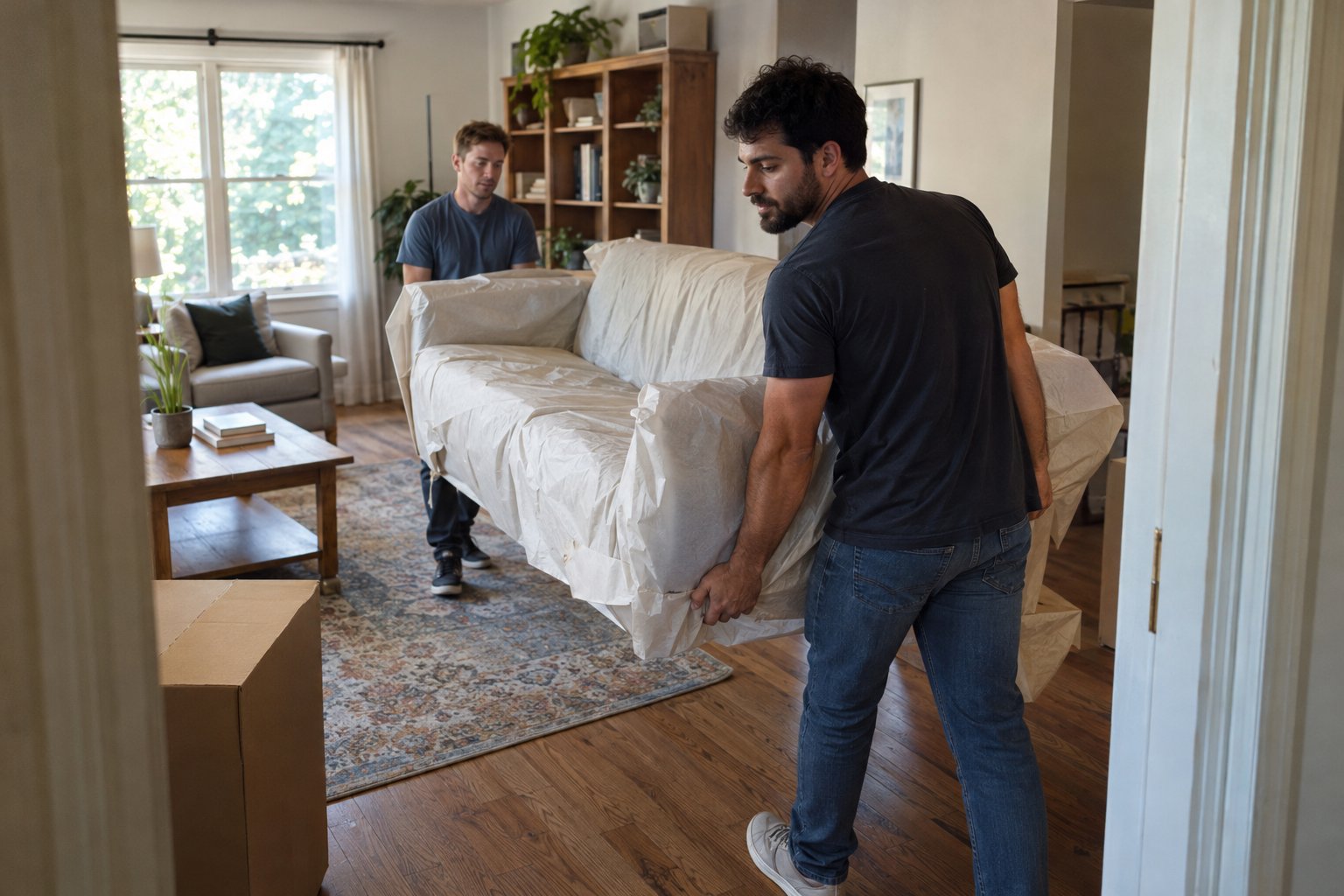
On a tight turn, it's almost always safer to stand furniture on end and walk it up vertically with two movers using straps than to try to angle it around a landing. For pieces that won't make the turn no matter the angle, partial disassembly (removing legs, feet, or a headboard) is usually faster and safer than forcing it, and it's far cheaper than repairing a hand-carved newel post. Our furniture disassembly and reassembly service exists mostly for situations exactly like this, where a piece needs to come apart to clear an original staircase and go back together correctly on the other side.
Guarding Doorframes, Trim and Plaster Corners
Original trim and plaster corners chip the moment a dresser edge or box corner clips them, and that kind of damage is one of the most common complaints in older-home moves. Corner guards or folded cardboard taped over doorframe edges and exposed plaster corners take a few minutes to set up and prevent most of this damage outright.
It also helps to remove anything removable ahead of time: doorstops, loose trim pieces, and any hardware (like original glass doorknobs) that could snap off under pressure. If a piece of furniture only clears a doorway by an inch or two, measure twice, because older door openings are rarely perfectly square, and what looks like enough clearance at the top can bind at the bottom.
Should You Hire Professional Movers for an Older Home?
For a move involving narrow stairs, original millwork, or floors you can't afford to scratch, experienced movers are worth it specifically because they've learned to read a house like this before they touch anything. A crew that routinely works in Oakwood, Bexley and Upper Arlington will instinctively check stairwell width, floor condition and door clearances before loading a single item, rather than learning the hard way mid-move.
That matters just as much for heavier or awkward pieces. A piano, a gun safe, or a large hutch through a tight older stairwell is a different job than moving the same item through a modern open floor plan, and it's where our heavy and specialty item moving experience tends to make the biggest difference. If you're weighing DIY against hiring help for a home like this, the honest answer is that the protective setup alone (floor runners, stair wrapping, corner guards, disassembly) takes real time and the right materials, and most people only get one chance to get it right.
If your move is in Oakwood, our Oakwood, OH moving company team already knows the housing stock in that neighborhood, and the same is true for our Upper Arlington, OH moving company crew on the north side of the metro. Either way, a free moving quote is the easiest way to tell us about your home's layout before moving day so we can plan for it in advance.
Frequently Asked Questions
How do I move a couch up a narrow old staircase without damaging the walls?
Wrap the banister, newel post and any tight corners in moving blankets secured with painter's tape before you start. Stand the couch on end if the staircase has a turn or landing, and use two people with lifting straps to walk it up vertically rather than angling it around the corner, which is when most wall and trim damage happens.
What's the best way to protect original hardwood floors during a move?
Lay ram board or heavy-duty floor runners along the entire path from the truck to each room, taping seams to each other rather than to the floor. Moving blankets alone tend to bunch up and shift under a loaded dolly, so a rigid covering holds up better on original hardwood or heart pine.
Will movers disassemble furniture that won't fit through an old doorway?
Yes, most professional movers will remove legs, headboards or other components when a piece won't clear a tight older doorway or stairwell. It's usually faster, safer for the furniture, and far less risky for original trim than forcing a piece through at an angle.
Do I need to do anything special before movers arrive at an older home?
It helps to walk the move path yourself first and note any tight turns, low doorframes, or fragile trim so you can flag them for the crew ahead of time. Removing loose hardware, doorstops, and anything breakable near doorways also reduces the chance of accidental damage.
Are plaster walls more likely to get damaged during a move than drywall?
Plaster corners and edges chip more easily than drywall because the material is harder but more brittle, so a sharp impact tends to crack or knock off a chunk rather than just dent. Corner guards over exposed plaster edges and careful furniture angles are the main ways to prevent this.
What Our Customers Say
Read genuine feedback from our satisfied customers to understand why we are the trusted choice for moving services.
Moving Ohio Families and Military Members With Care
From local Ohio moves to long-distance relocations, Journeymen Moving helps families and military members move with confidence. From the first box to the final unload, our team is here to make your move easier every step of the way.

.webp)
.png)


.png)